
Understanding the Characteristics of Golf Course Turf and How to Tackle a Round Through ‘Cool-Season Grass’ and ‘Korean Grass’
Know your turf, and your score will change
“What exactly is cool-season grass?”
“Why does the fairway turn yellow in winter?”
Even golfers who hit the course often rarely know much about turf, surprisingly enough.
The ‘turf’ you step on every round and that affects every shot can change your play once you truly understand it.
In fact, understanding turf means half the battle of conquering a golf course is already won.
Cool-Season Grass: The Fast Turf from the West
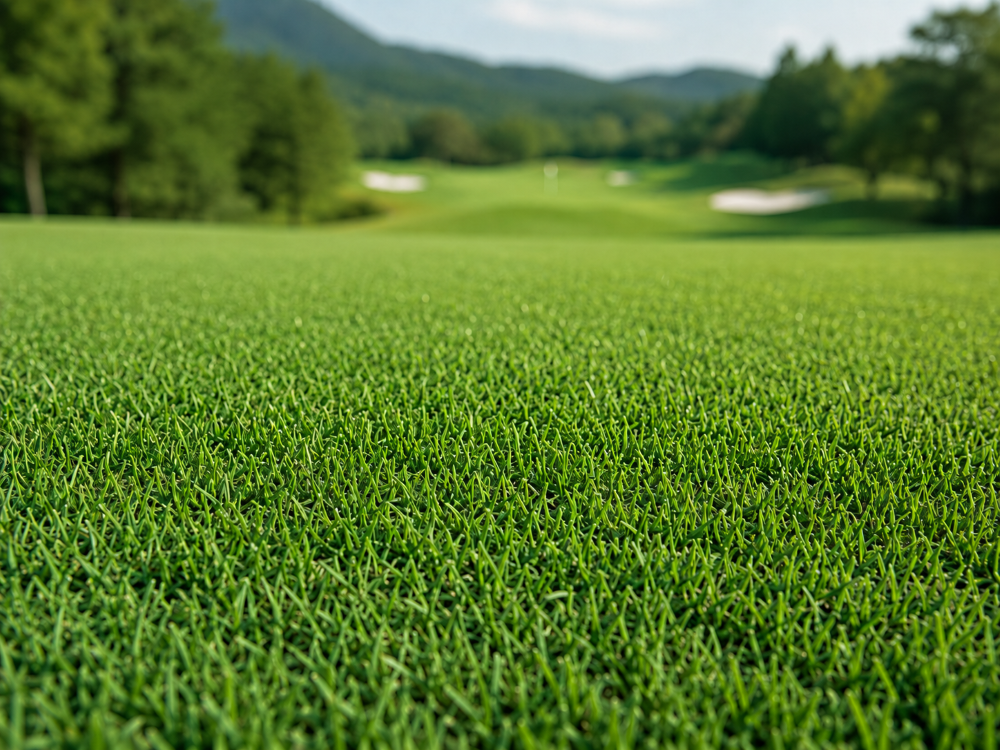
The ‘cool-season grass’ you often hear about at golf courses is, quite literally, turf brought over from the West. Varieties such as bentgrass, Kentucky bluegrass, and ryegrass belong to this category.
Characteristics of Cool-Season Grass
- The blades are fine and dense, so the ball rolls well
- Putting speed is fast, allowing for sensitive play
- The downsides are that it is weak against heat and has high maintenance costs
How to Tackle Cool-Season Grass
On cool-season grass, the golf ball rolls fast and consistently, and because there is little friction between the club head and the turf, more spin is generated. Because of these characteristics, hitting shots with more power than on Korean grass is effective on cool-season grass. In particular, using a down-blow swing that strikes down on the ball is advantageous for tackling it.
· When putting on cool-season grass, a delicate touch is required because the ball rolls quickly. On fairway shots, precise distance control is important, and around the green it is best to take advantage of the soft texture to attempt a refined approach.
Korean Grass: The Slow Turf with Strong Vitality
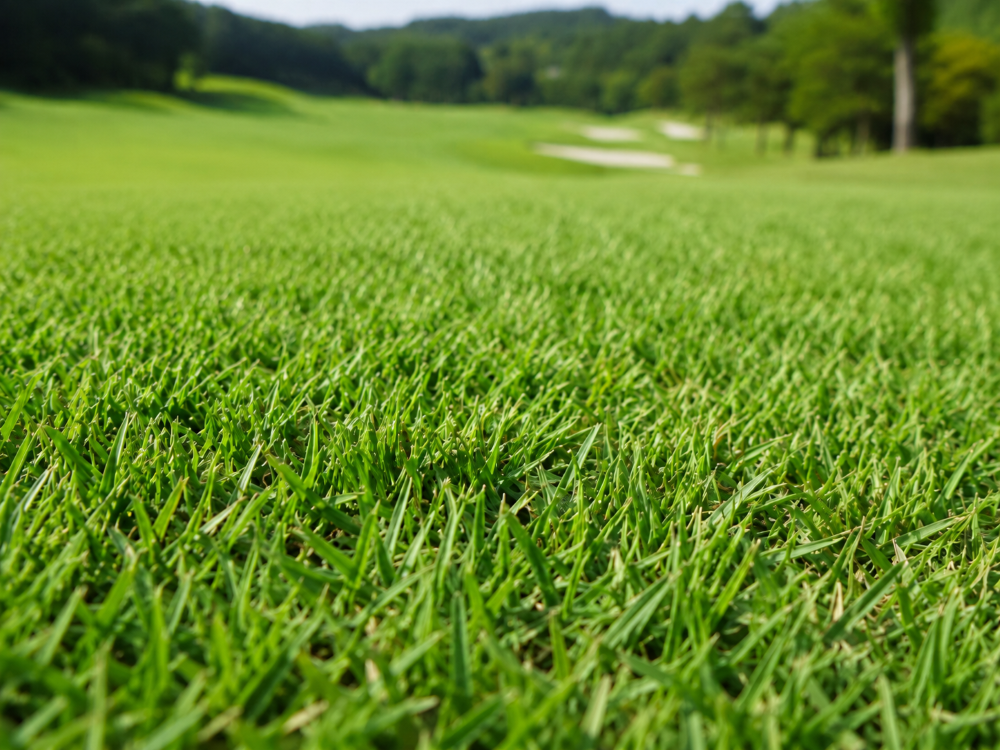
On the other hand, what we commonly call ‘Joseon grass’ is Korean grass—domestic warm-season varieties such as Korean lawngrass and medium-leaf zoysia.
It is strong in summer but turns yellow in winter, and this is a natural phenomenon, not poor maintenance. There is no need to worry when the fairway looks yellow in winter.
Characteristics of Korean Grass
- Strong against heat, with excellent vitality and sturdy roots
- The ball rolls slowly, which is advantageous for spin shots
How to Tackle Korean Grass
· A sweeping swing rather than a steep, digging strike is advantageous for increasing distance. When you are getting more distance than usual, gripping down on the club by about one notch to improve accuracy is also a good approach.
· When putting, the ball slows down and demands more spin, so it is important to apply firm force. When playing a shot from the rough, you must respond with a strong swing, taking the density of the turf into account.
Different Turf in Different Spots—There’s a Reason
Golf courses do not use just one type of turf. Because the green, fairway, and tee box each play a different role, a different type of grass is planted in each.
Tee Box—The First Impression of the Round
- Zoysia (Korean grass) or Tifton
The tee must hold firmly, the turf must withstand impact, and a good tee box raises your satisfaction with the first shot.
Fairway—Determines Your Satisfaction with the Shot
- Central inland regions: Kentucky bluegrass
- Southern regions / Jeju: Zoysia (Korean grass), Tifton 419
The feel of the shot changes with the firmness and softness of the ground, and in summer the density of the turf and its recovery speed can determine your satisfaction with the round.
Green—Where the Precision of Putting Is Determined
- Usually cool-season grass (bentgrass)
It is characterized by a feel of the ball gliding as it rolls. The more sensitive a golfer is about putting, the more keenly they respond to the condition of the turf.
A Four-Season Golf Course—Turf Management Is Key
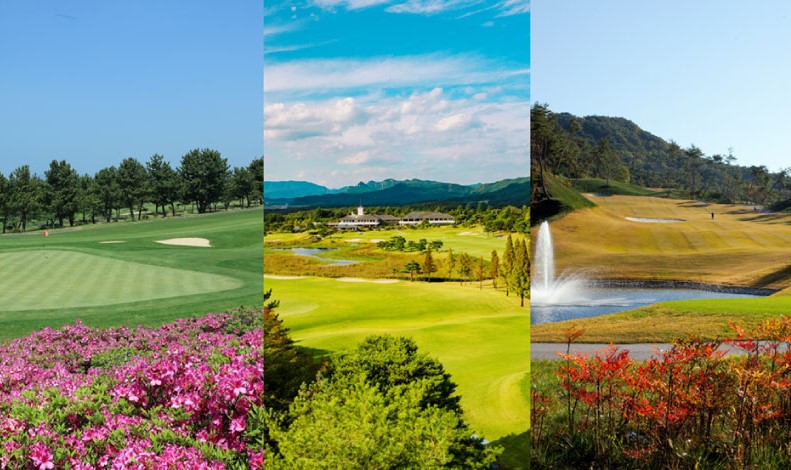
In a country like Korea with four distinct seasons, the turf can look different from season to season, and there are many cases where cool-season and warm-season grasses are sown together. In particular, a fairway that turns yellow in winter is not a sign of ‘inadequate maintenance,’ but a natural physiological phenomenon of warm-season turf. That is why, in recent years, technology that blends cool-season and warm-season grasses to maintain quality across all four seasons has been steadily expanding.
The feel of the turf underfoot, the speed at which the ball rolls, the sensation of planting a tee—every one of these is the result of turf management. GOLFZON County reflects regional climate, the character of each course, and golfers’ play styles to plant and maintain the optimal turf. Behind every shot you feel during a round lies the course management know-how that GOLFZON County has accumulated.
Related content

Screen Golf: Where Digital Sport Takes Center Stage (JoongAng Ilbo Sung Ho-jun)
The 126th U.S. Open concluded on June 22 with Wyndham Clark’s victory at Shinnecock Hills Golf Club on Long Island, New York. Throughout the…

Off-Course Golf Takes Center Stage in the Global Golf Ecosystem
The number of off-course golfers is rising worldwide thanks to golf simulators Born in the 15th century on the eastern coast of Scotland, golf…
“There Was Once a Golf Course in the Heart of Downtown Seoul?” The Beginning of 100 Years of Korean Golf
Today, Korean golf has grown into an industry equipped with world-class courses, services, and infrastructure. Golf courses across the country have established themselves as…